

05.07.2026–13.09.2026
Exhibition opening: 04.07.2026, 7 pm
We of the Tleilaxu believe that in all the universe there is only the insatiable appetite of matter, that energy is the only true solid.
— Frank Herbert, Dune Messiah (1969)
Nida Art Colony (NAC) is a subdivision of Vilnius Academy of Arts (VAA) located in Neringa, Lithuania. A site for art, education, research, leisure, and focused individual and collective work, NAC operates as a hybrid entity distinguished by its porous structure, fostering connections between the academic community, local and international art and cultural fields, and the wider public.
It is situated in the distinctive landscape of the Curonian Spit, a 98-kilometre-long sand dune peninsula shared by Lithuania and Russia. This UNESCO World Heritage Site has been shaped over the past 200 years by planted forests established to stabilise the natural movement of wind-driven sand.
The summer exhibition ‘Dune’ at Nida Art Colony approaches Neringa as a real yet myth-laden place, opening up a space for imagination against a backdrop of geopolitical and ecological upheaval.
The exhibition’s title first and foremost refers to the peninsula itself, whose landscape is the result of an ongoing collaboration between nature and human efforts to control the drifting sand dunes. Yet ‘Dune’ also alludes to Frank Herbert’s eponymous legendary science-fiction novel. Depicting a decisive moment in history, the novel reveals both the predictable and the improbable laws governing the universe. Here, the capacity to endure even under impossible conditions is grounded in radical belief and vision, discipline and community, self-awareness and environmental perception, ancient knowledge and foresight.
Moving between documentary and speculative fiction, the participating artists focus on the meanings and possibilities that emerge at the intersections of the human, nature, myth, and new technologies.
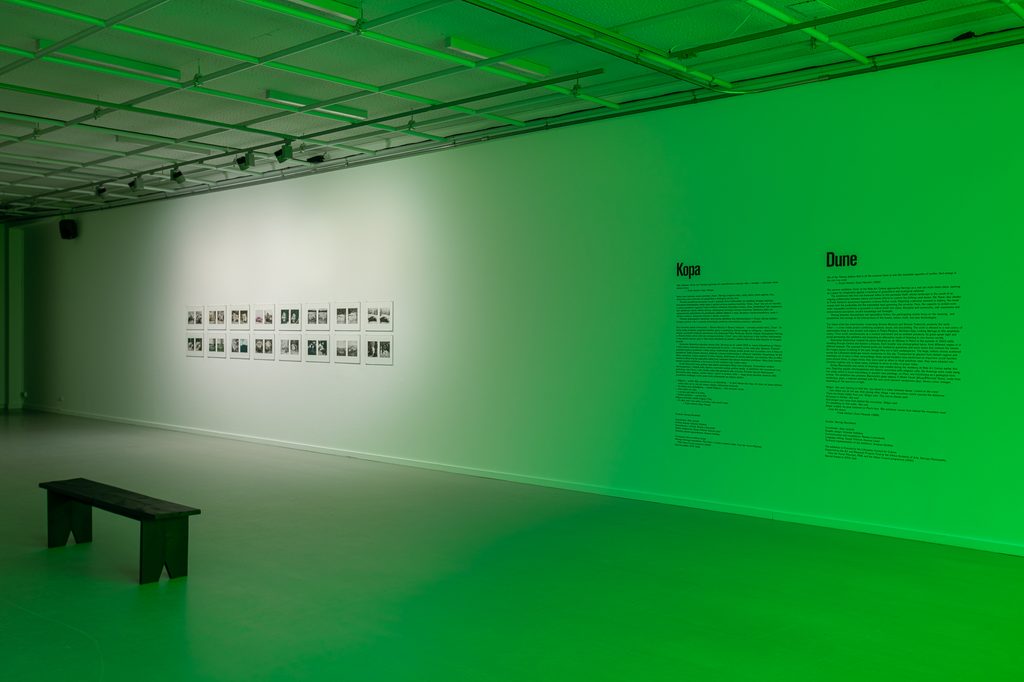
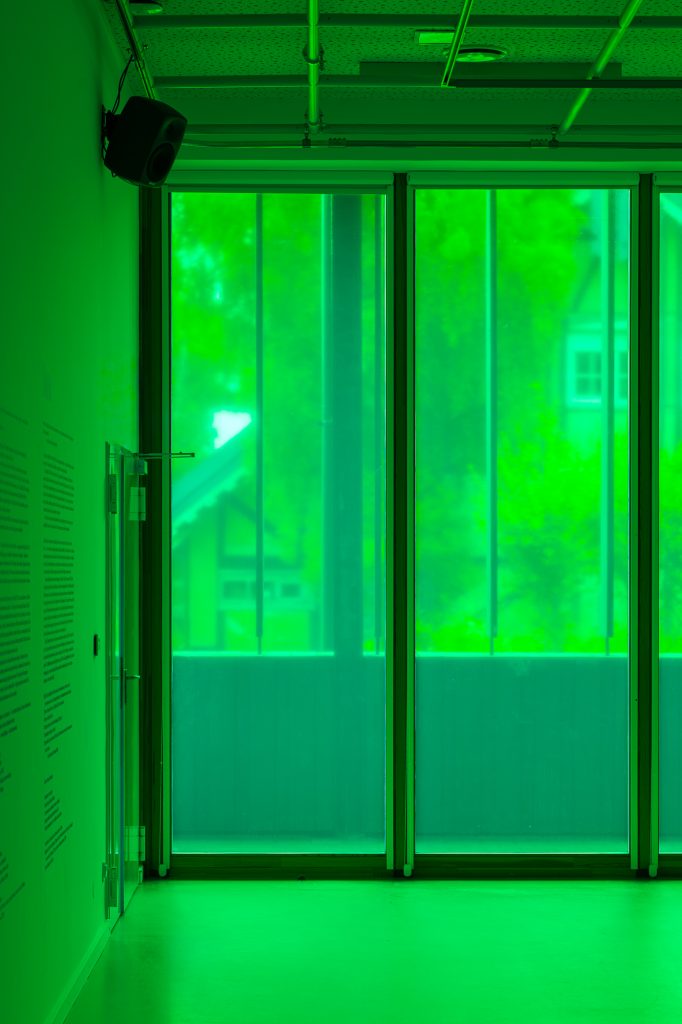
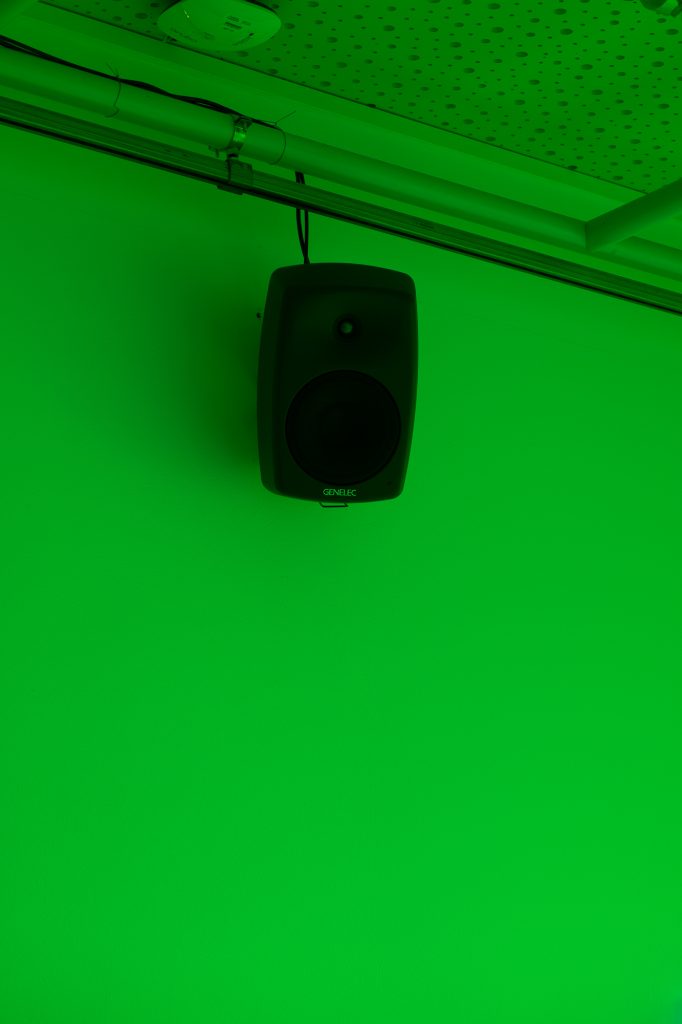
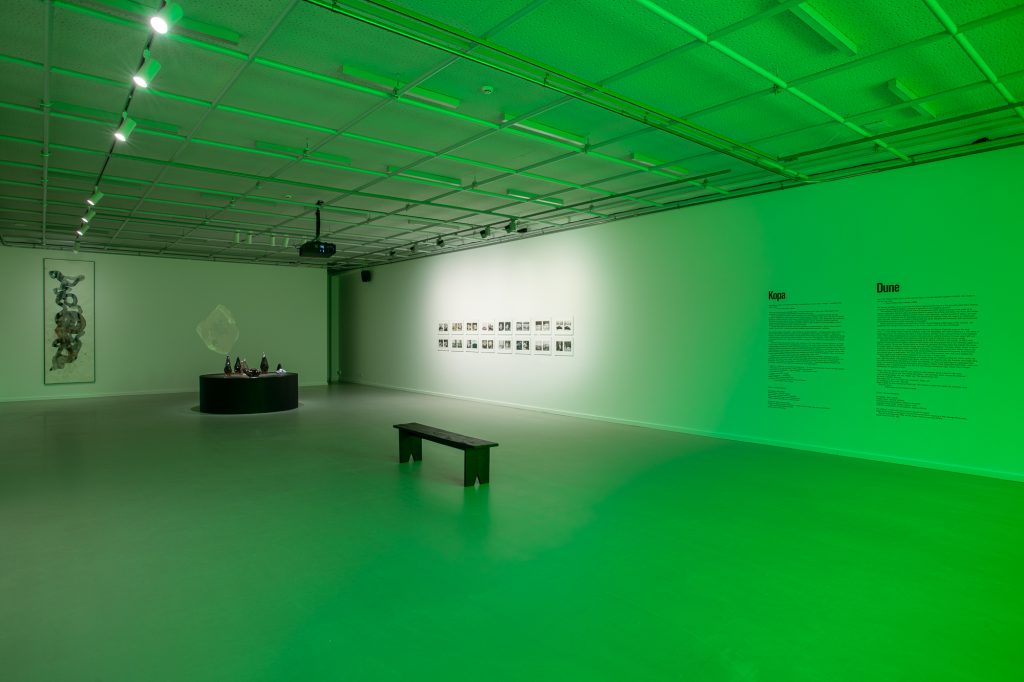
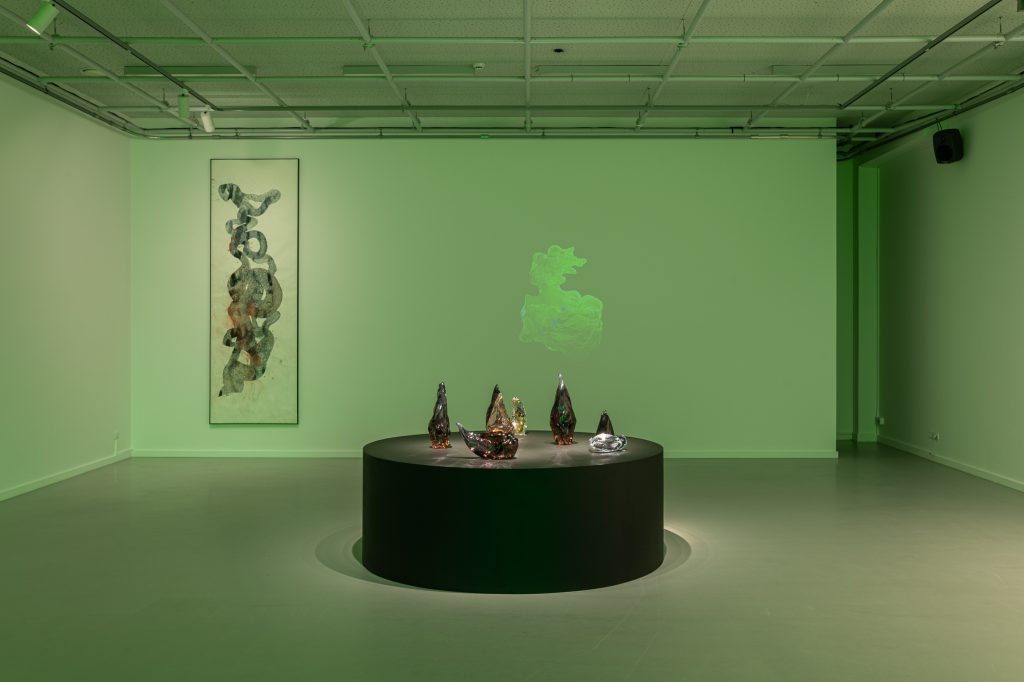
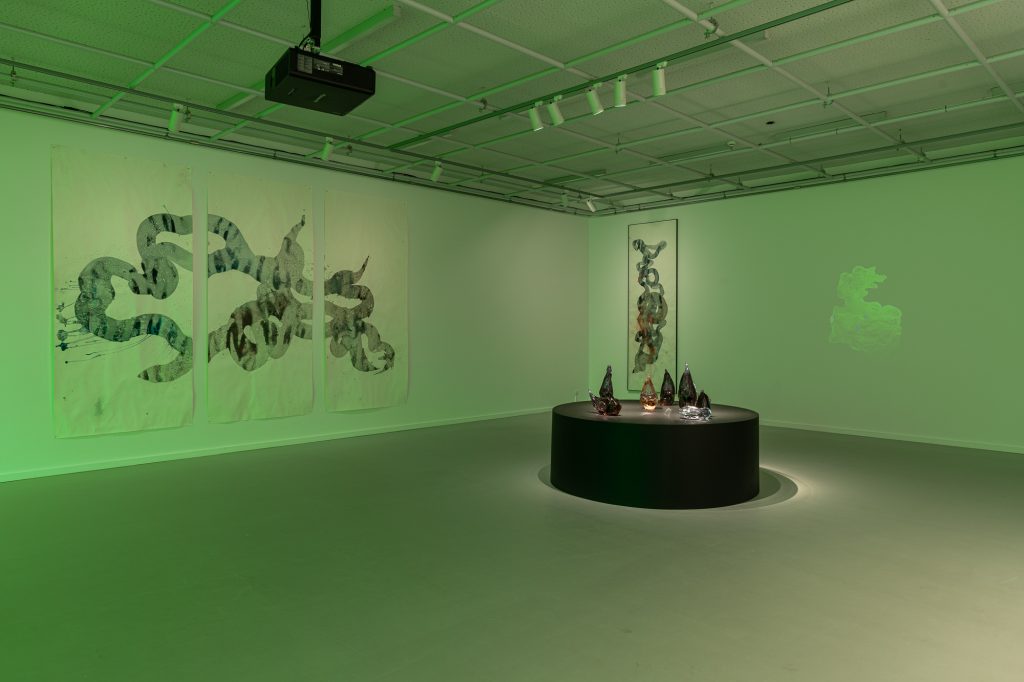
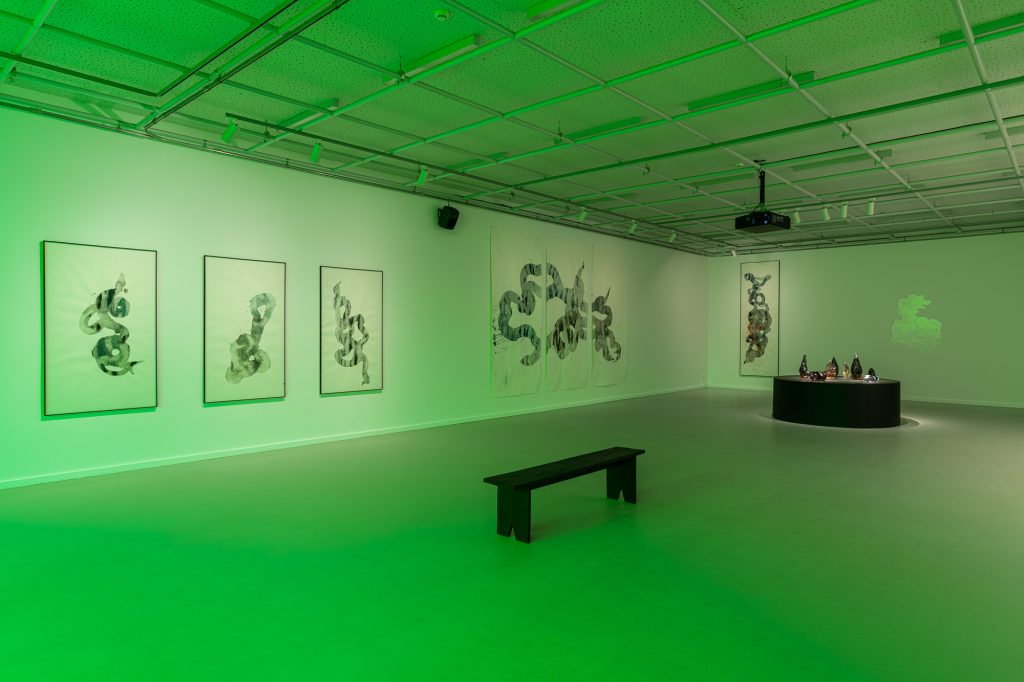
The Italian artist duo Invernomuto, comprising Simone Bertuzzi and Simone Trabucchi, presents the work Triton – a cross-media project combining sculpture, sound, and storytelling. The work is attuned to a real colony of salamanders living in two ancient rock basins in Pietra Perduca, Northern Italy. Linking Neringa to this amphibian colony, Triton exists simultaneously as a musical instrument and an ambient presence, its grass-green light and sound permeating the exhibition and proposing an alternative mode of listening to non-human worlds.
Deimantas Narkevičius created his series Akmenys po du (Stones in Pairs) in the summer of 2023 while travelling through Central and Eastern Lithuania. Each boulder was photographed twice, from different angles or in different seasons. The scanned Polaroid prints are marked by graininess and warm tones that mislead the viewer: the images appear to belong to the past, though they are in fact contemporary. The large, solitary stones scattered across the Lithuanian landscape remain mysterious to this day. Transported by glaciers from distant regions and seemingly out of place in their surroundings, these sacred boulders have performed an important social function since ancient times. In pagan times, they were used as altars in ritual practices; later, they were adopted into Christian tradition and, in some cases, continue to serve as sites of prayer today.
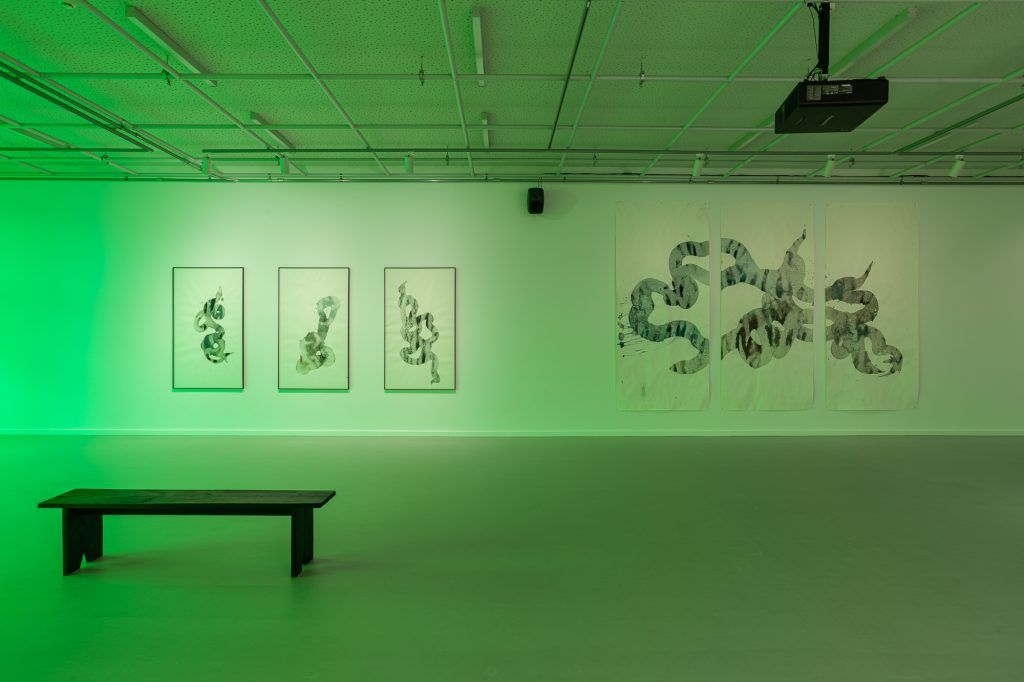
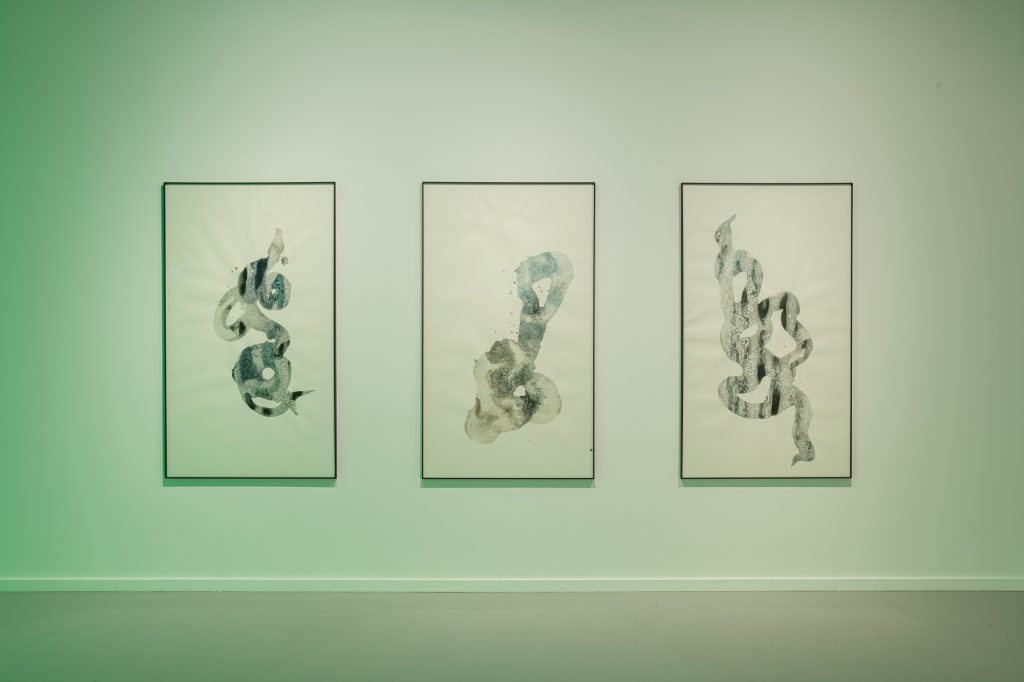
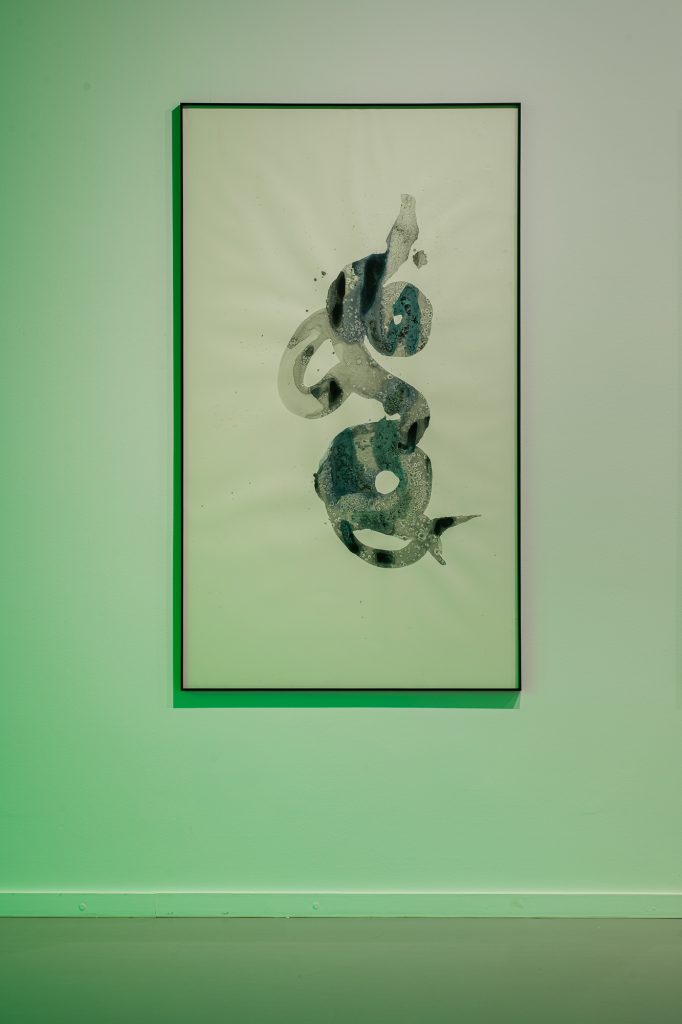
Emilija Škarnulytė’s new series of drawings was created during her residency at Nida Art Colony earlier this year. Depicting aquatic microorganisms and objects associated with religious cults, the drawings were made using iron oxide, which is found everywhere: in ancient cave paintings, on Mars, and functioning as a geological time archive. The exhibition also presents Škarnulytė’s glass objects If Water Could Weep (Mermaid Tears), made from neodymium glass, a material enriched with the rare-earth element neodymium (Nd), whose colour changes depending on the spectrum of light.
‘Stilgar’, Alia said, fighting to hold him, ‘you stand in a valley between dunes. I stand on the crest. I see where you do not see. And, among other things, I see mountains which conceal the distances.’
‘There are things hidden from you,’ Stilgar said. ‘This you’ve always said.’
‘All power is limited,’ Alia said.
‘And danger may come from behind the mountains,’ Stilgar said.
‘It’s something on that order,’ Alia said.
Stilgar nodded, his gaze fastened on Paul’s face. ‘But whatever comes from behind the mountains must cross the dunes.
— Frank Herbert, Dune Messiah (1969)
Curator: Neringa Bumblienė
Artists: Invernomuto, Deimantas Narkevičius, Emilija Škarnulytė
Coordinator: Asta Jackutė
Graphic design: Vytautas Volbekas
Communication and translations: Rosana Lukauskaitė
Language editing: Dangė Vitkienė, Gemma Lloyd
Technical implementation: Antanas Gerlikas
The exhibition is financed by the Lithuanian Council for Culture
Supported by the Art and Research Projects Fund at the Vilnius Academy of Arts, Neringa Municipality, Haus der Kunst München, PAN, and the Italian Council programme (2024)
Special thanks to GITA, Italy
Admission to the exhibition is free. The exhibition is open Tuesday to Sunday, 11:00–19:00.
The exhibition ‘Dune’ will coincide with the international symposium ‘Prehistoric Art and Symbols of the Eastern Baltic in the Contexts of the Eastern Baltic Neolithic’, organised by the Institute of Art Research at the Vilnius Academy of Arts in September. The symposium is dedicated to archaeologist and museum professional Rimutė Rimantienė, who extensively researched the Curonian Spit and, in particular, the ancient settlement of Nida, located in close proximity to the VAA Nida Art Colony.