

A Personal Map of Tallinn and Riga Art Spaces after a trip to the Nordic Residency Circle Meeting
- Informacija
- Paskelbta: 2012 spalio 14, Sekmadienis 08:52
Nida Art Colony crew headed on the 3rd of October towards Tallinn, where we participated in Nordic-Baltic Residency Circle meeting. As there were 8 spaces in the van, we invited some of our artists-in-residence to jump in the car and have a trip together.
En route to Tallinn we picked up our friend Signe Pucena from Riga; Signe runs the Interdisciplinary Art Group SERDE, based in rural Latvia. SERDE has a unique way of working with the local community, a relationship built up very naturally through different projects over the years that have been relevant to both to the resident artists and the local community, such as moonshine (vodka) making workshops using local recipes collected from older generations of people living in the village. Just outside of Riga I had a tasty Latvian version of a Russian soup, accompanied by some carrot pancakes with breakfast cereal on top; pretty unusual considering it was an evening meal.
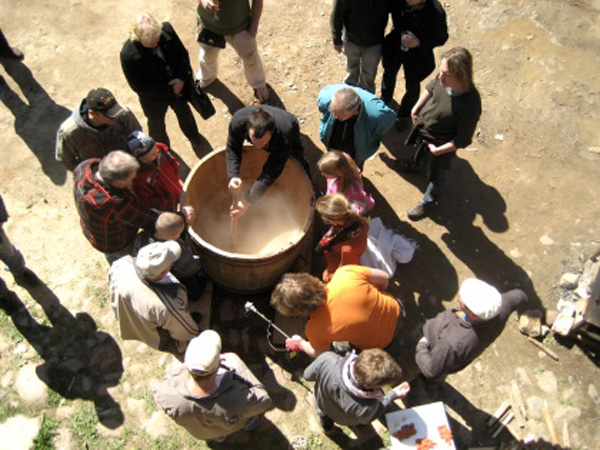
Brewing workshop, image from http://labsalus.lv/alus-aizpute-pirmais-baltijas-majalus-daritaju-saiets/
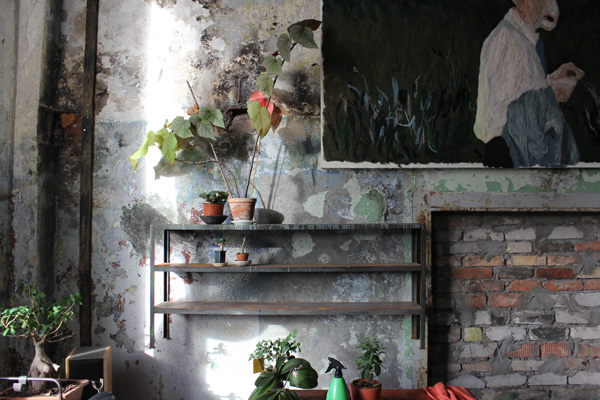
Arriving in Tallinn just before midnight, we found our way inside Culture Factory Polymer, an artist-led alternative culture space in a huge old building that used to be a toy factory in soviet times. To paraphrase Ernest Truely, our host for the two nights, the place is the total opposite of Nida Art Colony; artworks, graffiti, mannequins, a miniature toy museum and other bits and pieces make their way in to most corners of the building. The lines between the space itself and the art created within it are blurred, just as workshop crosses over with performance, you can sauna inside a work of art, whilst watching a gig taking place in an installation. It's chaotic, but it lends itself to artists being experimental in a way that they perhaps would not feel able to do in more traditional art spaces. Polymer have an international residency programme, artist studios, an event space and facilities, such as the printing press that students from the Estonian Academy of Arts are currently using due to their temporary homelessness, their university building having been fairly recently demolished.
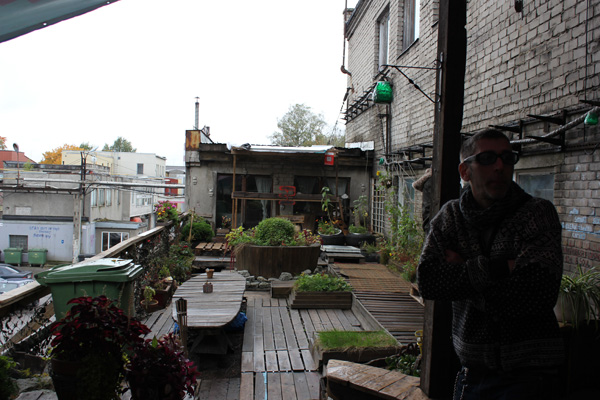
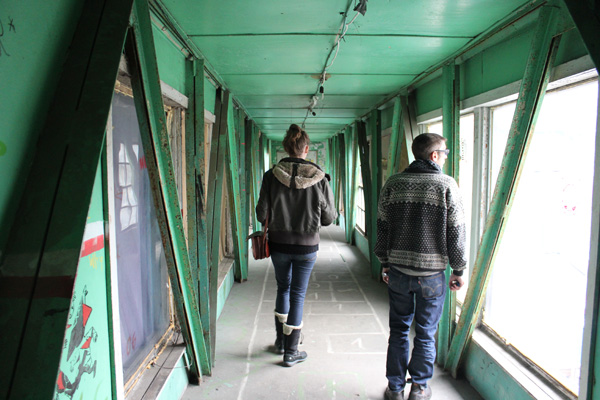
Ernest Truely in the Polymer roof garden and showing our artist in residence Fiona Rielly round, photo by artist-in-residence Marika Troili
2.tants is a dance agency based at Kanuti Gildi Saal, another building that the displaced art students have re-located to for some of their needs. Of course it is probably only as an outsider that I am able to note any positive outcomes of the dislocation of the students by their own university, but it seemed that through their having no other facilities to access, the art students in Tallinn are integrated in to their local art scene far more than students perhaps usually are before having graduated, using the different arts spaces around the city according to their needs. Kanuti Gildi Saal has a great performance space, an international residency programme as well as studios, and are located inside yet another interesting old building.
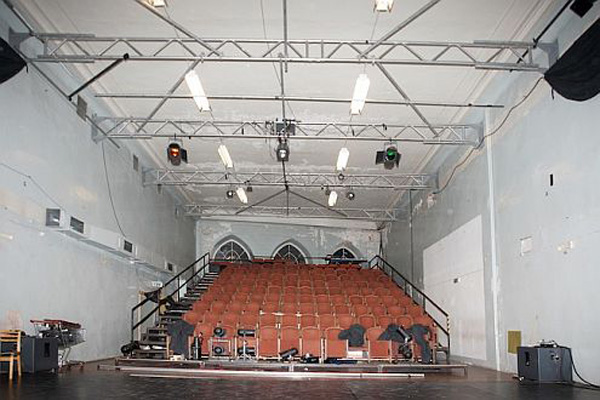
2.tants Theatre space, image from http://www.saal.ee/saal
From the Nordic – Baltic Residency Circle meeting we attended we were able to talk to representatives from other residency centres across these regions; as there were many participants I didn't manage to talk to everybody there, so I'll write here about those I got the chance to speak to and found the most interesting. Mustarinda Association is situated in a remote, woodland setting in Finland, and takes on a really interesting mix of theorists and researchers as well as visual artists.
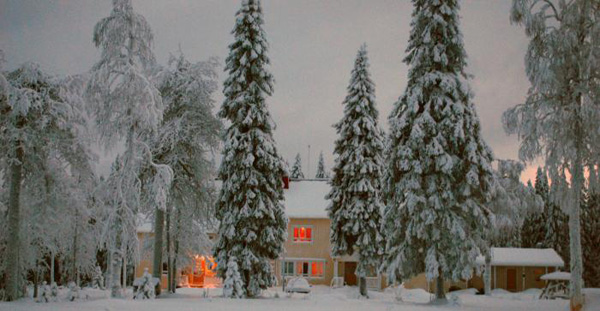
Mustarinda Association http://www.mustarinda.fi/N%C3%A4yttelyt/Media
EMS in Sweden did a presentation about their studios and research centre, where they hold residencies for people working with electronic music and sound art. They've been going since the 60s (footage from the centre's early explorations into computer based sounds are well worth checking out on youtube) and still have a really good ethos and exciting approach towards supporting innovations in experimental, electronic sounds.
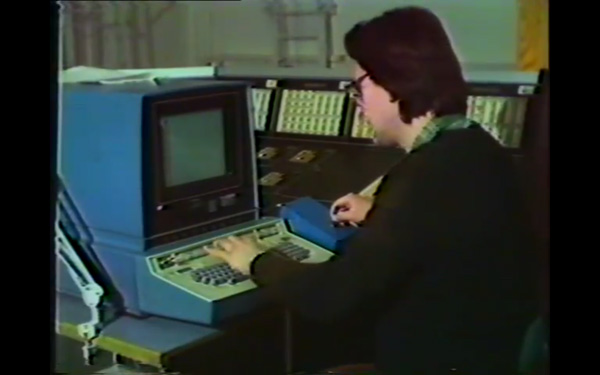
Film still from 'Thomas Sjöland @ EMS, Stockholm' on Youtube
Fabrikken for Kunst og Design in Copenhagen sounded like an interesting centre simply due to the mix and number of residents; there are 55 studios that practitioners from fields such as architecture and set design as well as contemporary art are working in. It also appeared as though the organisation's relation with the local community extended far beyond a gesture, informing both the resident artists' practice and the local community, engaging in a two way dialogue.
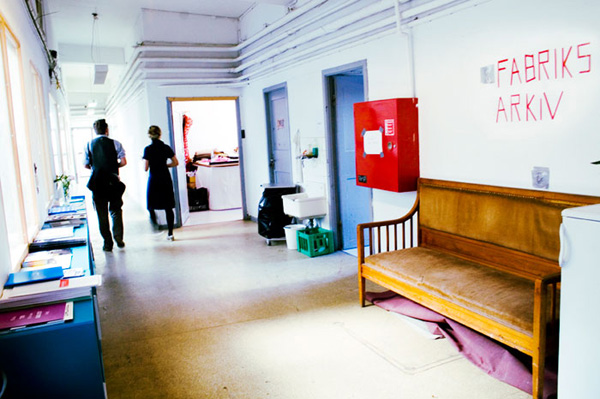
Fabrikken for Kunst og Design in Copenhagen, image from http://www.ffkd.dk/english/english.php
I didn't get a chance to visit Ptarmigan in Tallinn, but through conversation it sounded as though they've got a great programme of critically engaged, interdisciplinary projects, running in tandem with their partner organisation in Finland.
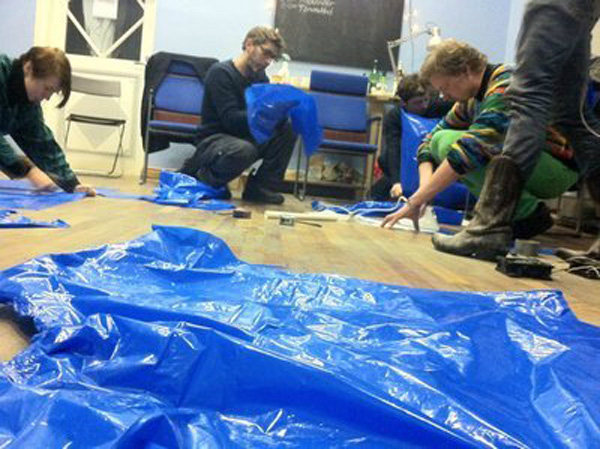
'Fake it Til You Make It' workshop, image from http://www.ptarmigan.ee/projects
I am only really able speak of how much I personally have come in to contact with coverage and reportage of the art scene in the Baltic states as an artist / curator from the UK; however, through searching for articles about Tallinn and Riga on major arts websites, there is little mention of art activity other than the Baltic Triennial of International Art, even with Tallinn being one of the European Capitals of Culture last year. Certainly, artists from the Baltic States represent their countries at major international biennials, however I feel it is fair to say that the art scenes themselves that these artists are temporarily exported from seem to go relevantly unnoticed on an international scale. In this sense you could call these cities remote; just as a remoteness may distance residents at Nida Art Colony from the rest of the world in spacial terms, such conditions enable a very communal and supportive network for those within it. I got the impression that this is precisely why the art scenes in these cities are thriving and at least why I found Tallinn and Riga such exciting cities to visit; with not such a prominent placing in the European contemporary arts community and a welcome lack of the over-saturation of projects that can be found in cities with a much larger and more prominent art scene, such as Berlin and New York, they have created their own supportive and exciting contemporary arts network. As Nida Art Colony is part of the Baltic – Nordic Network of Remote Residencies, as an artist or curator staying here, it's a really good way of being able to get far more of an insight into these cities' art spaces than perhaps one would have as an artist traveling here alone or from of course looking them up on the internet.
I wandered if this positioning within the European art scene has created the necessary framework for centres such as the EKKM (Estonian Museum of Contemporary Art) to emerge, which describes one of its aims as „to take the place of a missing contemporary art museum in the art field, but in another sense it should ask what a contemporary art museum should be like: what makes a museum and what kind of a museum is possible and necessary“. The exhibition we visited was one of the most exciting I have seen in a long while; initially squatting the building, the EKKM are indeed an 'alternative art space', yet they question the categorization, and ultimately the kind of institutionalization that this umbrella term brings; they are if you will, an alternative to the alternative.
Logo for Estonian Museum of Contemporary Art
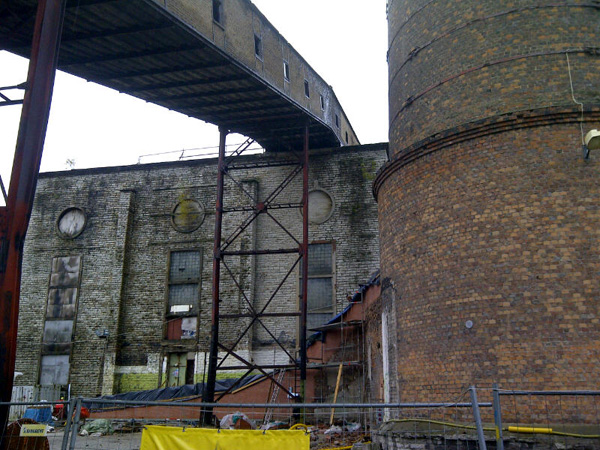
While beautiful, after a day or so in the touristic old town, it's nice to get further out of the centre; if you're a fan of Andrei Tarkovsky's 1979 science fiction film from 1979, Stalker, the EKKM's positioning opposite the building in which the entrance to the Zone is filmed is pretty exciting. The exhibition we saw really worked with the space, for instance a film was screened in a precariously sloping shaft, so that you had to walk down a steep decline to your seats, to watch the screen suspended below your feet.
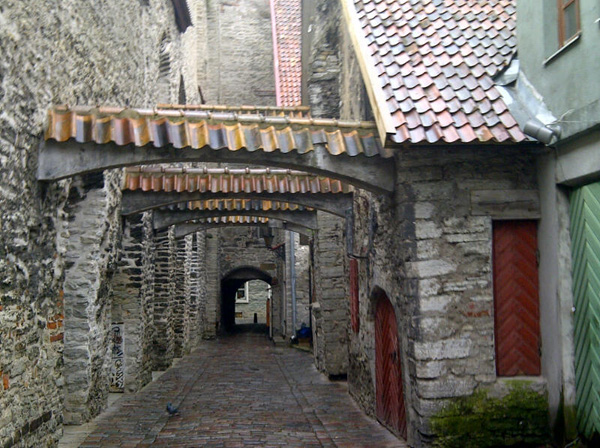
A street in Tallinn's old town
Entrance to the Zone, with what looked like reconstruction activity surrounding it
Before I move on to our next city, I must mention a 24 hr cafeteria next to the train station that Ernest Truely got us on to, serving mostly fried food; late at night/ early in the morning, a fried doughnut or two filled with potato is pretty incredible.
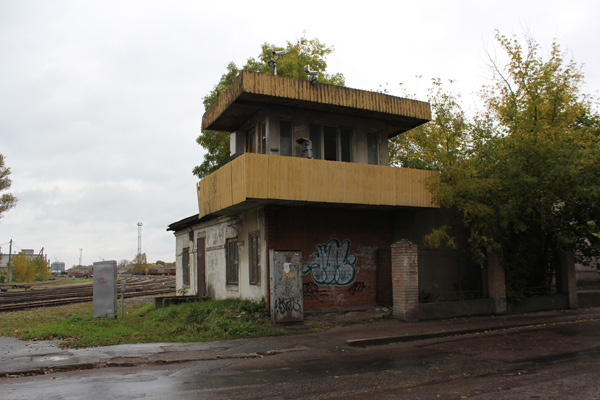
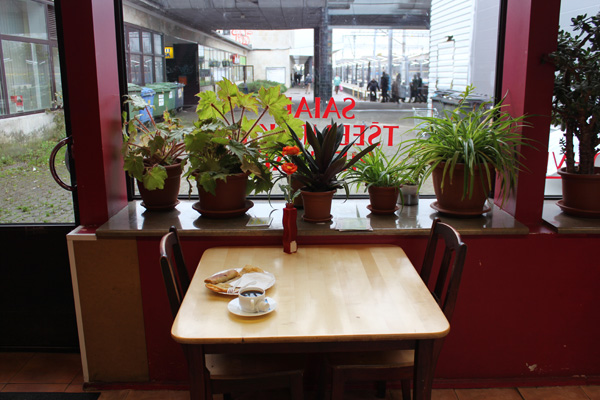
Train tracks in Tallinn, photo by artist-in-residence Marika Troili
Fried food in the train-side cafetria, photo by artist-in-residence Marika Troili
Driving to Latvia, we arrived at kim? in Riga, which again, had one of the most exciting exhibitions I have seen in a while, And So On and So Forth, comprised of international artists and curated by Margit Säde Lehni. Engaging with work in a way that goes beyond the current trend of investigations in to 'unrealised' projects, works were exhibited in different stages of progress – unending, indefinite, incomplete, "well-done", "badly done," and "not done", which made for really engaging and sometimes funny work.
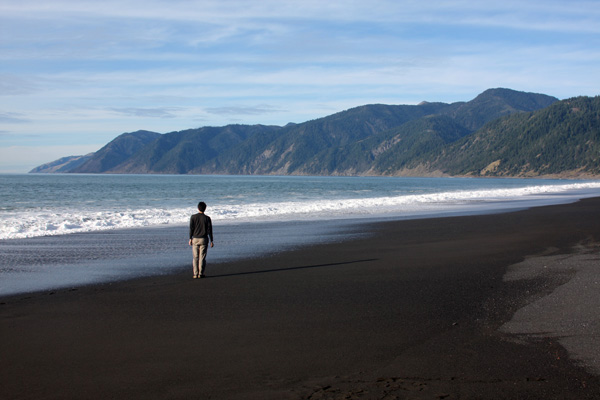
David Horvitz, Public Access, 2011 – ongoing, dimensions variable, part of exhibition And So On And So Forth, image taken from http://www.kim.lv/programma/Izstades/AND_SO_ON_AND_SO_FORTH/229/1
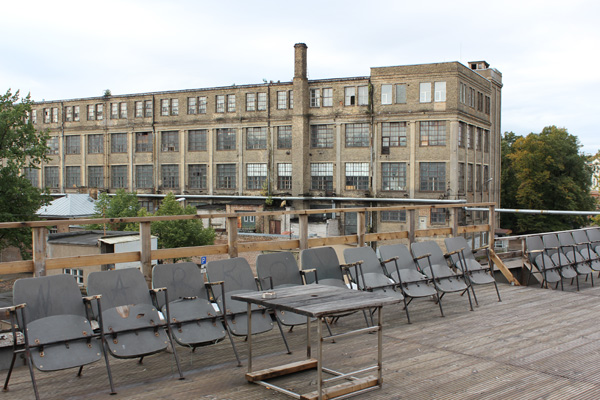
Our host Kaspars Lielgalvis from Totaldobze took us to a Georgian restaurant for a really tasty late night meal full of meat and cheese. Another amazingly friendly welcome to the centre we were staying in, Kaspars showed us round the building, positioned in an area of factories that televisions and telephones used to be made in in soviet times; much like Polymer, it has kept most of the building's interior as it was, however it has a totally different feel (you will have to visit for yourself to see). The centre is not so residency-focused currently, but their focus seems to change from one exciting project to the next – for instance they've hosted music, art and performance festivals and have recently started a test project of renting a separate part of the building for events. The night we were leaving a choir were going to perform, which was pretty appropriate, seeing as the acoustics in the huge industrial space sounded not unlike a church. Kaspars himself as well the other artists in the building are working on some really interesting projects, while a real mix of others are using the space, such as architects and dance groups. As with Polymer, it was really inspiring to see what could be done with abandoned empty spaces once artists put their heads and energy together, to create new spaces which really challenge the dynamics and habits of making and exhibiting contemporary art. All in all, an inspiring and interesting trip – thank you Ernest and Kaspars for letting us stay with you.
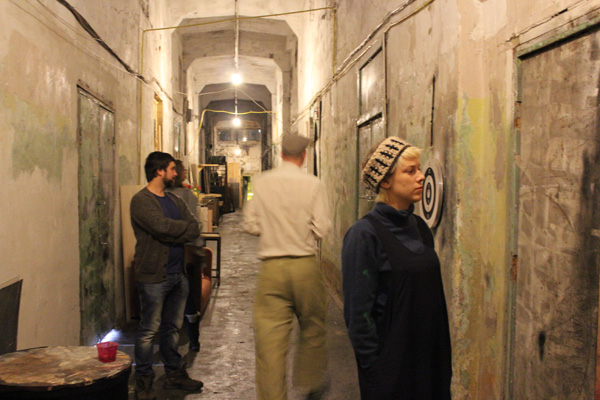
Kaspars Lielgalvis showing us around Totaldobze, photo by artist-in-residence Marika Troili
Rooftop view from Totaldobze, photo by artist-in-residence Marika Troili
Textile work by Kaspars Lielgalvis, photo by artist-in-residence Marika Troili
P.S. If you want to get some cheap second hand clothes after all this culture, I recommend the Humana store in Tallinn for 1 euro items.
Olivia Glasser
Curatorial Assistant at Nida Art Colony