Techno-Ecological spring residencies
- Published on Wednesday, 23 April 2014 10:31
After a week of rain, spring has finally arrived and buds appeared on the trees. The Colony started the reconstruction of the second building, our former warehouse is now completely destroyed, the yard is full of trucks, machinery, workers and the ground is covered by a mountain of rubble. We work along the rhythm of jackhammers.
In the beginning of April thematic Techno-Ecologies residency started, we host now 8 new residents, included 2 collectives, for 2 months: Anna Romanenko (DE/RU)/ Björn Kühn (DE)/ Gabriel Hensche (DE) from Stuttgart and Martinka Bobrikova & Oscar de Carmen (ES/NO/SE) from Oslo, Ernest Truely (USA/EE) from Tallin and Frauke Materlik (DE) from Norway /Germany. More about them below.
Martinka Bobrikova (SK/NO/SE) & Oscar de Carmen (ES/NO/SE)
Artist duo, has been working together since 2005. Their artistic practice is located in the act of transcending the boundaries between art and social research. In the residency Art Colony their main theme is related to transitory and utopian, they want to create a public dialogue with the goal of a variety of ecological issues surrounding food through artistic projects and interventions. Right now they are developping their idea for Nida, get back here to know more about it in soon!
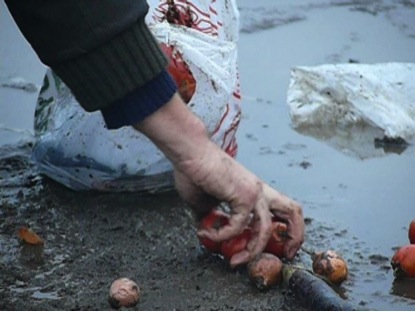
Video still "Tbilisi 25.10.2010 17:50" part of the installation "C'est ratatouille", 2014 ©Martinka Bobrikova & Oscar de Carmen
www.madefromwaste.org
http://kitchendialogues.com/
Ernest Truely (USA/EE)
uses Art Science and Technology to bring us closer together. During several visits to NAC as workshop leader and symposium participant he has experienced a unique state of mind and presence of emotion which can be described, not in words, but perhaps through artistic production.
Inspired by a lecture Ramūnas Povilanskas during the Inter Format Symposium at NAC in May 2013 Ernest Truely has been pondering the construction of a grand narrative of the Curonian Spit: ”If, in fact, the landscape, the ecology, the inhabitants of forest, sand and sea possess no particular distinguishing characteristics, it is only by means of simulacra that we can embody what is so entrancing and magnetic about this unlikely bit of real estate”. While in Nida Ernest Truely willl create new forms and the détournement of previous forms. The media explored will be signs, plaques, symbols, artifacts, histories, reported research and sightings, digital images, wikis and web formats.
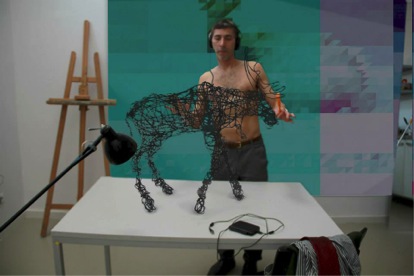
White elk tracer© Ernest Truely
https://www.facebook.com/nidarefresh
http://errorists.weebly.com/ernest-truely.html
http://whiteelktracer.wordpress.com
Frauke Materlik (DE)
In her work discusses the subject matter of landscapes as context for socio-political activity, yet also as a symbolic and narrative system. Here in Nida, she focuses on the surrounding landscape, infrastructure and environment with 'relocation','memory', and 'perception' as keywords, thus connecting her background in fine art, landscape architecture, horticulture and cultural studies. Frauke transforms her questions and findings into installations and performative interventions, in the studio as well as outdoors.
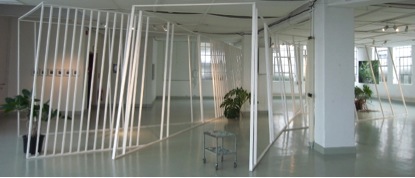
'intrikat'. Frauke Materlik installation view of show in Norway, september 2013-january 2014
Anna Romanenko (DE/RU) / Gabriel Hensche (DE) / Björn Kühn (DE)
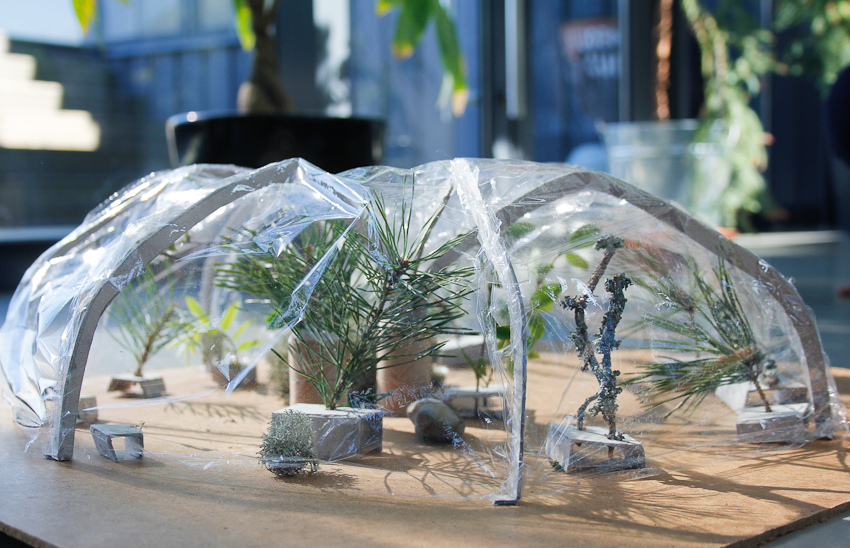
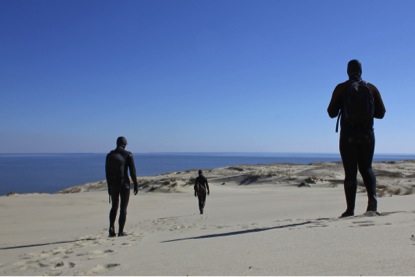
Liminal Dome is a project by three artists: Gabriel Hensche, Björn Kühn and Anna Romanenko. They studied visual arts, theater directing, architecture and cultural sciences in Stuttgart, Hamburg, London and Alexandria. Liminal Dome project (underwater structure in the Baltic sea) boldly aims for a glimpse of a possible future. In this venture to reach new territory diving is asserted as a mode of invention. Submerging towards an altering perception Liminal Dome builds the ground for narratives of a shifted concept of environment. Taking diving as a strategy to prepare for the big flood, Liminal Dome also figures as a hub harbouring diverse reformulations of the body and its surroundings.
Julia Wirsching (DE)
studied Philosophy, New Musictheater and Vocal Arts. Her current artistic interest lies on the voice floating between body and language. The voice regarded as an intermediate phenomenon which expresses itself and inherents its own means of expression.
At the moment she is researching for a music theater- installation, which she will develop together with Gabriel Hensche. Here the voice becomes part of the metabolic process between plants, humans and a machine in a closed ecosystem.The gas exchange between the chant and the plant leads to a score and the voice becomes part of a closed circuit that reformulatesits own production.