

Thursday Cinema: films by Author Cinema Alliance
- Published on Tuesday, 25 February 2014 15:59
During the upcoming three weeks every Thursday our sceen will host a film by authors of Alliance of Cinema d'Auteur.
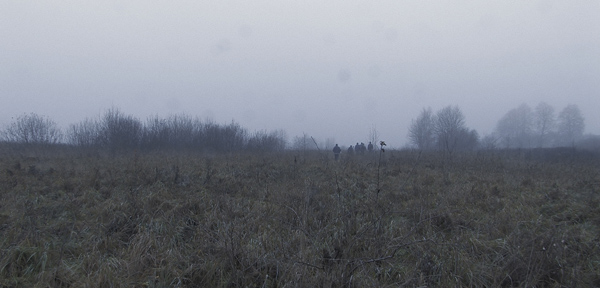
26th February: CENOTAPH
A creative documentary by Audrius Stonys, filmed by Audrius Kemežys
2013, duration 61 mins.
Film will be presented by the cinematographer A.Kemežys
Three soldiers with no names lie beneath the roots of an oak. Two are Russians and one is a German. They were buried there during the war at night, in secret, fearing everyone and everything. They shared one grave pit for seventy years. Has the fear that had bound people seventy years ago finally disappeared? After all these years, has the road to the eternal resting place for these soldiers become easy to find?
6th March : JULIA
Documentary by J.Jackie Baier
2013, duration 89 mins.
“I cannot say ‘I am a woman’, but neither am I a man,” Julia says of herself. “I am something you don’t know from a dictionary. I am – something … a creation of God, but an odd creation. The God didn’t take good care during my birth.” – Any authority other than this god who was at fault, is not accepted by Julia. She never signed the ‘contrat social’.
JULIA is a ‘long term portrait’ of today 30 years old transsexual woman Julia K. from Klaipeda/Lithuania, who came to Berlin as an 18 years old, since then working as a prostitute – the last 8 years on the strip on notorious Frobenstrasse.
A story of faith and disbelief. Of uprootedness and belonging.
13th March: HOW WE PLAYED THE REVOLUTION
Documentary by Giedrė Žičkytė
2011, duration 67 mins.
The story of the film begins in 1984, the very beginning of perestroika in USSR, when a group of architects decided to organize a one night music band as a New Year’s party joke in Kaunas, Lithuania. The joke proved to be so good that rumors about the new exciting rock band ANTIS spread from lips to lips.
Imposing make-up and props, stylized show, and lyrics were creating pervasive caricature of the Soviet propaganda and perfectly discrediting the absurd of the Soviet reality.
Soon their intellectual clownery grew into the Rock Marches – massive events involving thousands of people – that transformed into the big meetings for Lithuanian Independence later named the Singing Revolution.