Candice Hopkins at Vilnius Academy of Art
- Published on Monday, 07 October 2019 15:38
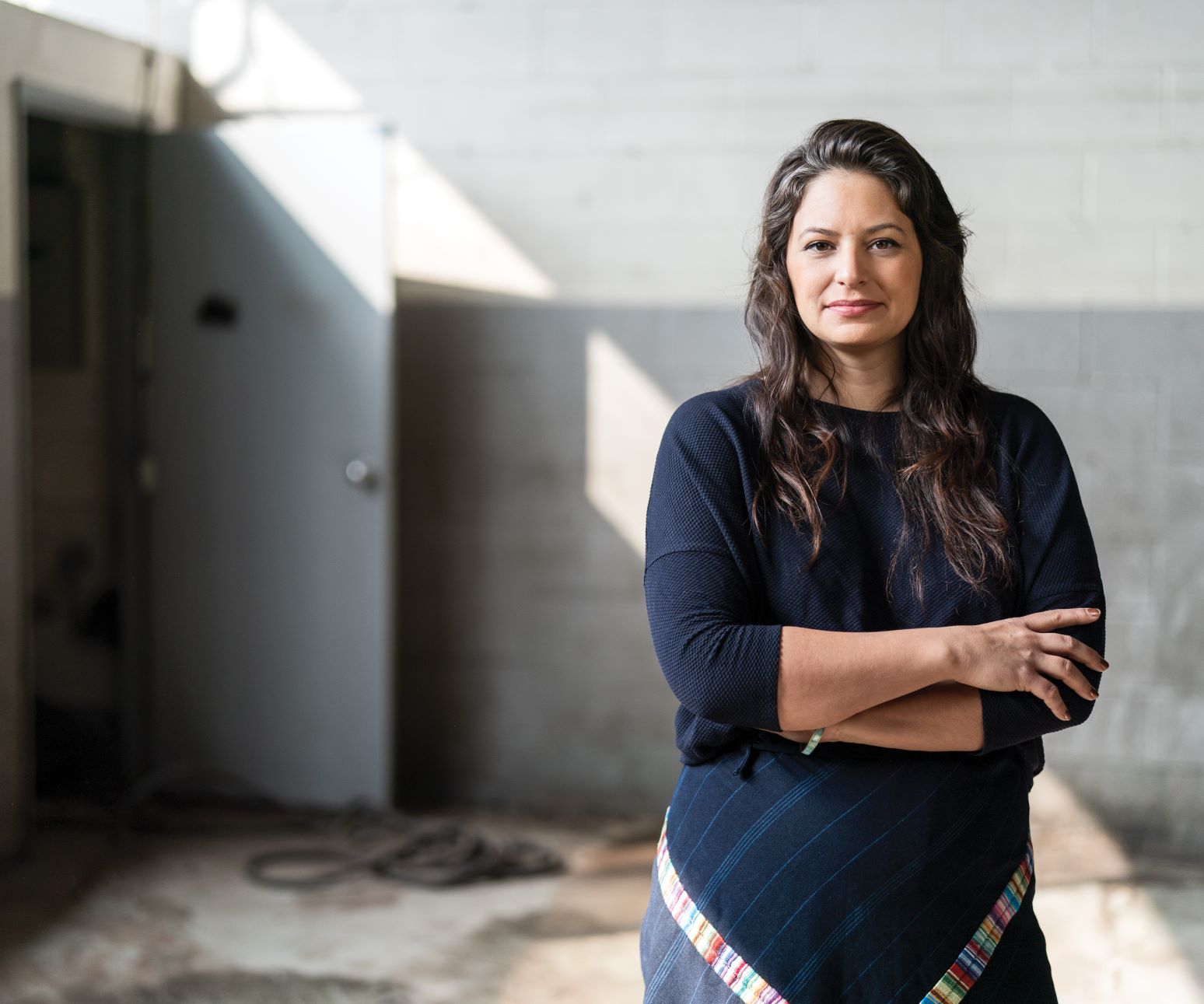
| VAA Nida Art Colony together with VAA Doctoral Studies Department invite you to attend the public lecture by Senior Curator of the 1st Toronto Biennial of Art Candice Hopkins at Vilnius faculty. Doctoral students of VAA are encouraged to register for a consultation by the curator. She will be staying in Vilnius for 2 days and one of them, October 9, will be dedicated to the art community of Vilnius. |
| 11:00 lecture by Candice Hopkins regarding her curatorial practice and the Toronto Biennial of Art, followed by a discussion.
12:30-14:30 public presentation and a commentary of VAA Doctoral students porfolios (30 min for each). The event will take place at Malūnų g. 3, room 102. In order to register please contact the Doctoral Studies Department or send an email to This email address is being protected from spambots. You need JavaScript enabled to view it. (please write down your name, surname and the requested presentation time). Cadice Hopkins’ visit is part of the 4Cs: From Conflict to Conviviality through Creativity and Culture project. It is partly funded by Creative Europe and Lithuanian council for culture. Candice Hopkins is a curator and writer originally from Whitehorse, Yukon. She is Senior Curator of the Toronto Biennial of Art (2019). She was co-curator of the SITE Santa Fe biennial Casa Tomada (2018), a part of the curatorial team for documenta 14 in Athens, Greece and Kassel, Germany (2017) and a co-curator of the major exhibitions Sakahàn: International Indigenous Art (2013), Close Encounters: The Next 500 Years (2011), and the 2014 SITElines biennial Unsettled Landscapes in Santa Fe, New Mexico. Her recent essays and presentations include Outlawed Social Life for South as a State of Mind and Sounding the Margins: A Choir of Minor Voicesat Small Projects, Tromsø, Norway. She has lectured internationally including at the Witte de With, Tate Modern, Dak’Art Biennale, Artists Space, Tate Britain and the University of British Columbia. She is the recipient of numerous awards including the Hnatyshyn Foundation Award for Curatorial Excellence in Contemporary Art. She is acitizen of Carcross/Tagish First Nation. Toronto Biennial of Art Land Acknowledgement The Toronto Biennial of Art acknowledges the land upon which our event takes place, in multiple venues across the city, stretching from the Small Arms Inspection Building in Mississauga in the West, to the Port Lands in the East, from Harbourfront Centre in the South, to the Art Gallery of York University in the North. We acknowledge, first and foremost, that all of these spaces are located on land that has been a site of human activity for more than 12,000 years. This land is the traditional territory of the Huron-Wendat, Haudenosaunee, and Anishinaabe peoples, including the Mississaugas of the Credit First Nation. Their stories, beliefs, and concepts about the land and the water continue to guide and inspire us. We acknowledge the individual histories and knowledge that every participant, colleague, guest, and visitor brings with them to the Biennial. With more than ninety participants from around the world, and potentially tens of thousands of people taking part to witness their work and their words, we are thankful for the teachings and wisdom that each person carries, passed down to them through generations of ancestors. We acknowledge our physical surroundings, from the many buildings and outdoor spaces that house our exhibition and events, to all that lies beneath, including the rocks, soil, bugs, and root systems. We recognize the many lost rivers below us that vein across the city, continually moving water south. These rivers connect us all, physically and psychically, to the lake. We acknowledge the trees that surround the sites, tracing the root systems up towards the surface, as well as the grass, plants, insects, and animals that live beside us, sharing the city and the lake. This expansive constellation of beings, both human and not, are always in relation, and we thank them all for being here. Finally, we direct our intentions to the sky. We acknowledge the clouds, moon, sun, and stars whose light has made this fantastic journey across space and time. |